Breathing & Movement – How proper breathing improves your performance
Strength doesn't begin in the muscles – it begins in the breath.
The way you breathe determines how efficiently your body works , how quickly you recover, and how clear your focus remains.
In competitive sports, breathing has long been more than a reflex – it is a training tool.
With the ChiroGun Recovery method, you can specifically combine your breathing with movement to optimally synchronize muscles, fascia and nervous system.
Why breathing is the key to performance
Every movement begins with a breathing impulse.
Proper breathing ensures:
-
improved oxygen supply to the muscles ,
-
more stable core and
-
faster regeneration .
Many athletes underestimate how much breath control affects strength and precision.
A trained breathing pattern can increase performance by up to 15% – according to studies in the field of sports physiology.
This is how you train the connection between breath and movement
-
Diaphragmatic breathing
→ Goal: Activation of deep muscles & stress reduction
→ Here's how:
Place one hand on your stomach, breathe in deeply until your abdomen rises.
Exhaling takes twice as long as inhaling.
→ Tip: Gently apply the ChiroGun to the abdominal or chest area to gently stimulate the respiratory muscles.
-
Controlled Breathing in Motion
→ Goal: Regular breathing rhythm during exercise
→ Here's how:
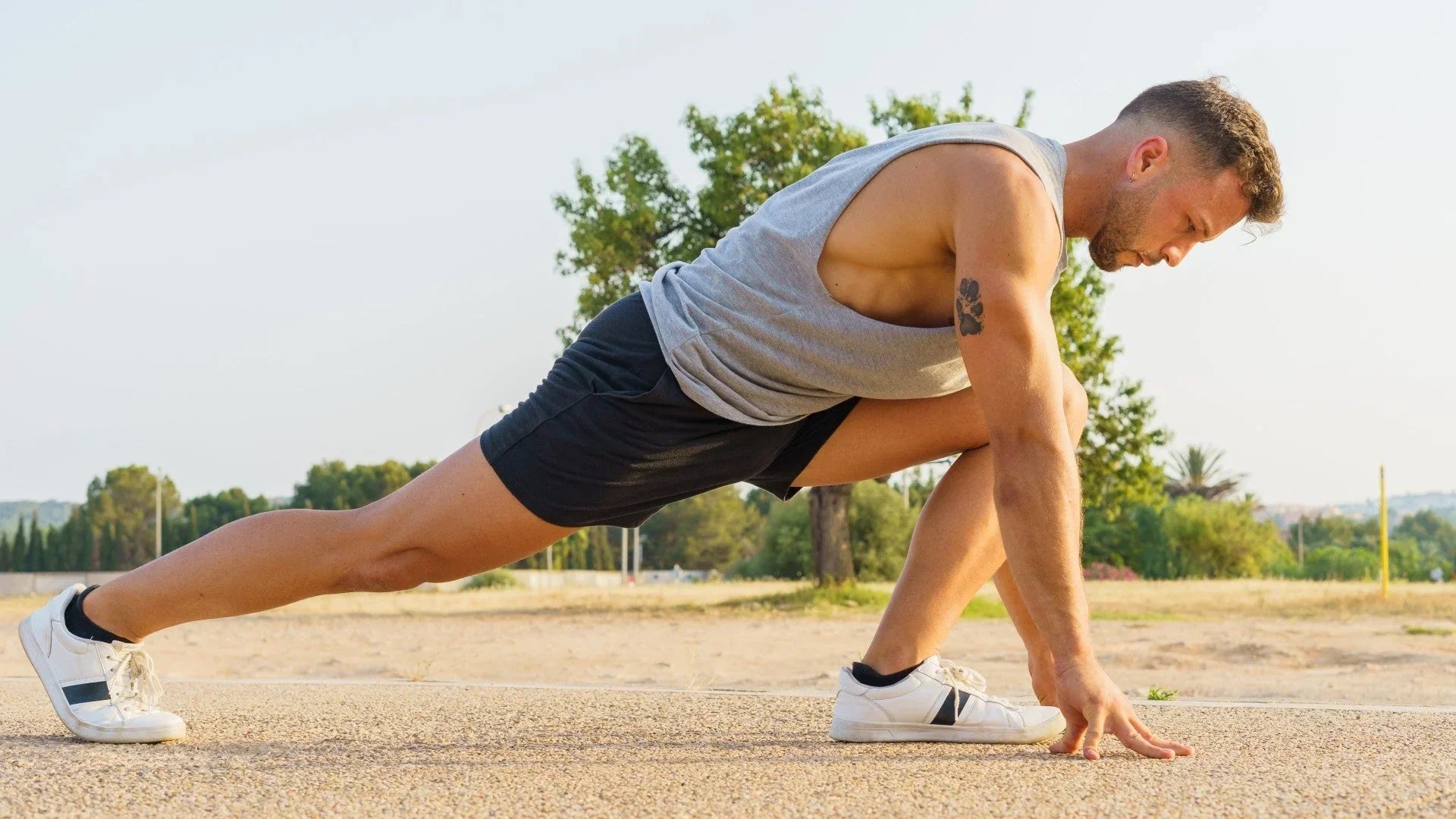
During dynamic exercises (e.g., squats or lunges), inhale for 2 seconds, exhale for 2 seconds – integrated into the flow of movement.
→ Effect: Improves control and timing, stabilizes the core during intense exertion.
-
Recovery Breathing Protocol
→ Goal: Rapid recovery after exertion
→ Here's how:
Sit upright, inhale deeply for 4 seconds, exhale for 6 seconds.
Pause briefly after each exhalation.
→ Tip: Combine this with a gentle vibration of the ChiroGun along the chest; this stimulates the parasympathetic nervous system.
-
Breath & Focus Flow
→ Goal: Mental clarity & muscle relaxation
→ Here's how:
Lie down comfortably on your back and focus on your breathing rhythm.
Each exhalation is accompanied by a targeted relaxation of individual muscle groups.
→ Effect: Lowers the pulse, promotes blood circulation, improves sleep quality.
The scientific background
Breathing not only influences oxygen transport but also the fascial network through pressure and tension forces in the torso. Deep, controlled breathing can reduce fascial tension , increase range of motion, and alleviate pain. Therefore, more and more physiotherapists and sports coaches are incorporating breathing techniques as an integral part of recovery programs.